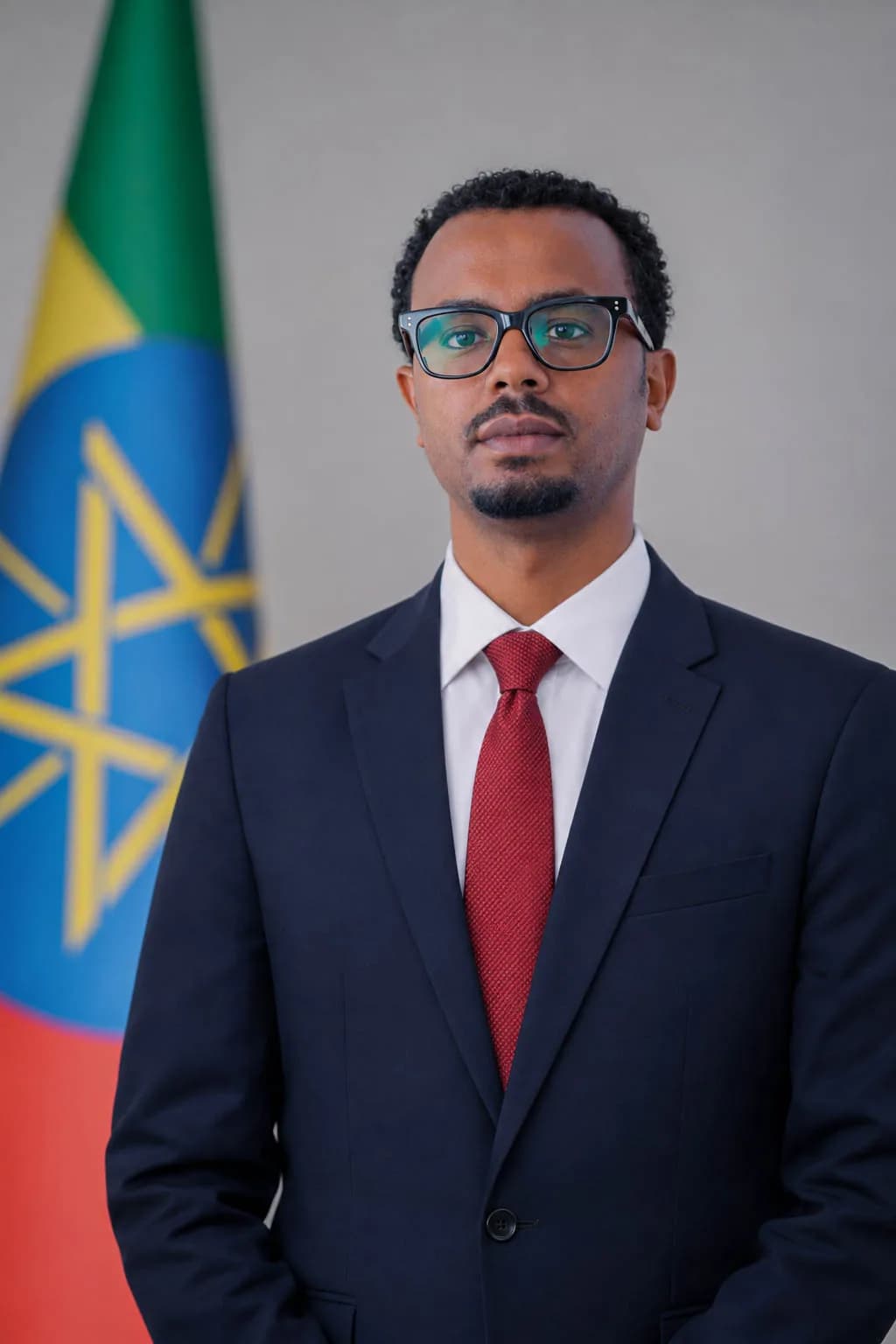
Message from the Minister
Welcome to the Ministry of National Strategy.
Ethiopia has set itself a long horizon. The Medemer Grand Strategy looks to 2050 and asks what kind of country we intend to be: sovereign in our decisions, united in our diversity, productive, a leader in our region and continent, and able to hand on to the next generation more than we received. Its central idea is simple. Ethiopia does not lack resources, talent or institutions. What we have often lacked is the bringing together of these strengths, so that the effort of one institution adds to the effort of another. Medemer means that we achieve more together than the sum of what each of us achieves alone.
This Ministry was established to help make that idea work in the daily business of government. Under the new Proclamation on the powers and duties of the federal executive organs, the Ministry is entrusted with the national strategy, from which the Government's policies, plans and programmes are derived. It prepares the national development plan and the macroeconomic framework. It appraises public investment, leads spatial and population policy and the integration of climate policy into development, studies the reform of the executive, and monitors and evaluates national performance. Six institutions are accountable to it: the Ethiopian Statistics Service, the Policy Studies Institute, the Environmental Protection Authority, the Civil Service Commission, the Ethiopian Mesob Service and the African Leadership Excellence Academy. Together they cover what a capable State must be able to do: know its own condition, decide on evidence, act through a competent public service, serve its citizens well, and correct its course.
We do not begin from nothing. The Ministry of Planning and Development and its institutions leave a foundation of which the country can be proud. Federal institutions now plan and report in one common format, supported by a digital planning, monitoring and evaluation system. A public investment system is in place, with directives and sector guidance for appraising projects before public money is committed. The national accounts and the Consumer Price Index have been rebased, and regional GDP estimation has been introduced. Policy research has informed major reform decisions, and the country's environmental and climate framework has been strengthened. In the wider sector, a merit-based civil service policy has been adopted, and Mesob centres have brought thousands of public services under one roof. I thank the leaders and professionals whose work made this possible.
Our task now is to build on that foundation and to ask more of it. Plans, statistics and reports matter only when they lead to better decisions and better lives. In the coming five years the Ministry will work to ensure that every government plan is drawn from the national strategy, and that public money is committed only to projects that have been properly examined. We will work with the Statistics Service so that every citizen is counted and the country's figures are trusted. We will bring evidence to decisions before they are made, and report honestly on what has been achieved and what must be corrected. We will work with the regions so that the federation plans as one, and with our six institutions so that the public service, its leaders and the services citizens receive improve together.
We will do this as a ministry that coordinates and supports. Our role is not to command. Each ministry, each region and each of our institutions keeps its own responsibility. Our role is to keep the direction clear, to connect the parts, and to make sure the country learns from its own experience.
I invite our partners in government, the regions, the private sector, universities, civil society, our development partners and every citizen to work with us. The prosperity we seek will be built by many hands. This Ministry will do its part with discipline, openness and a sense of duty to the generations that follow.